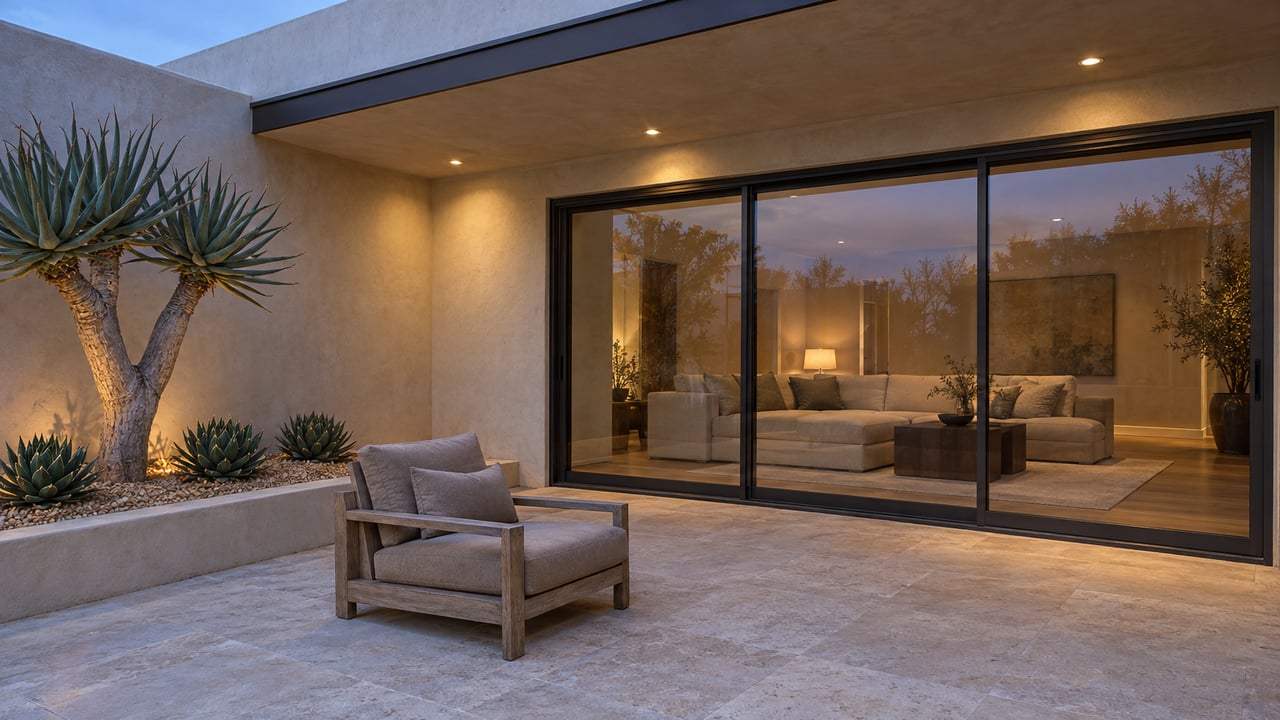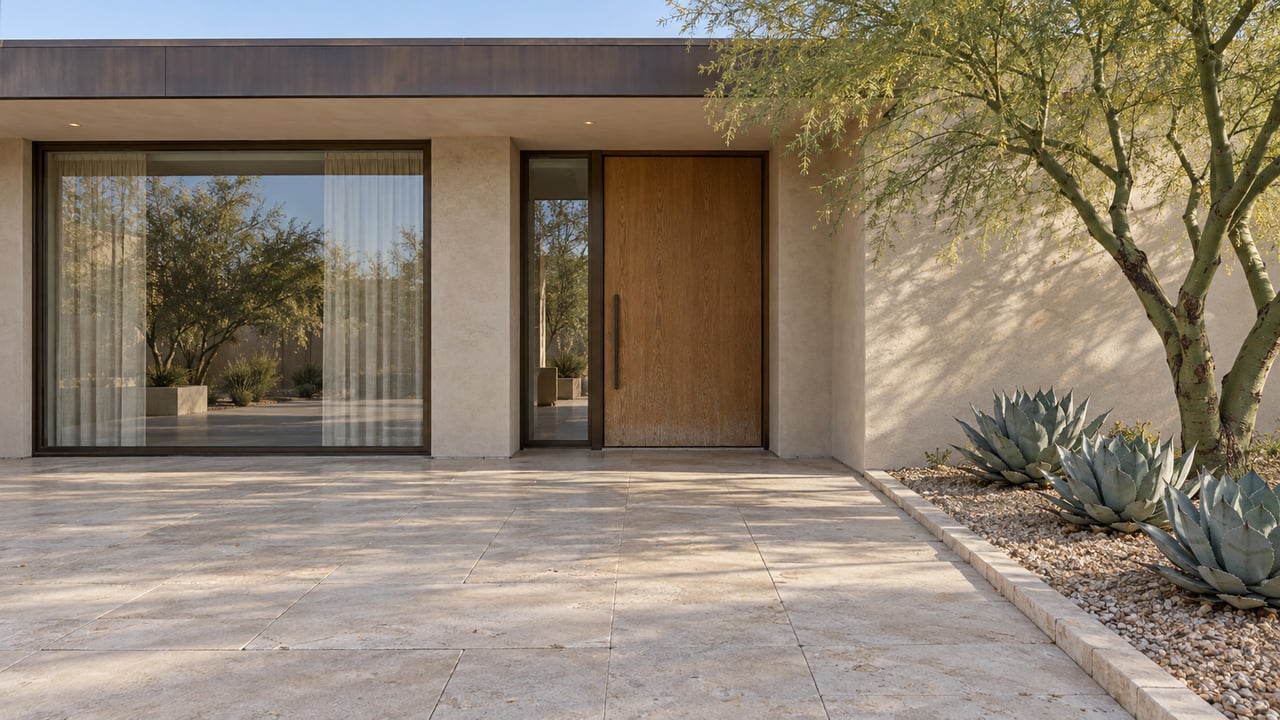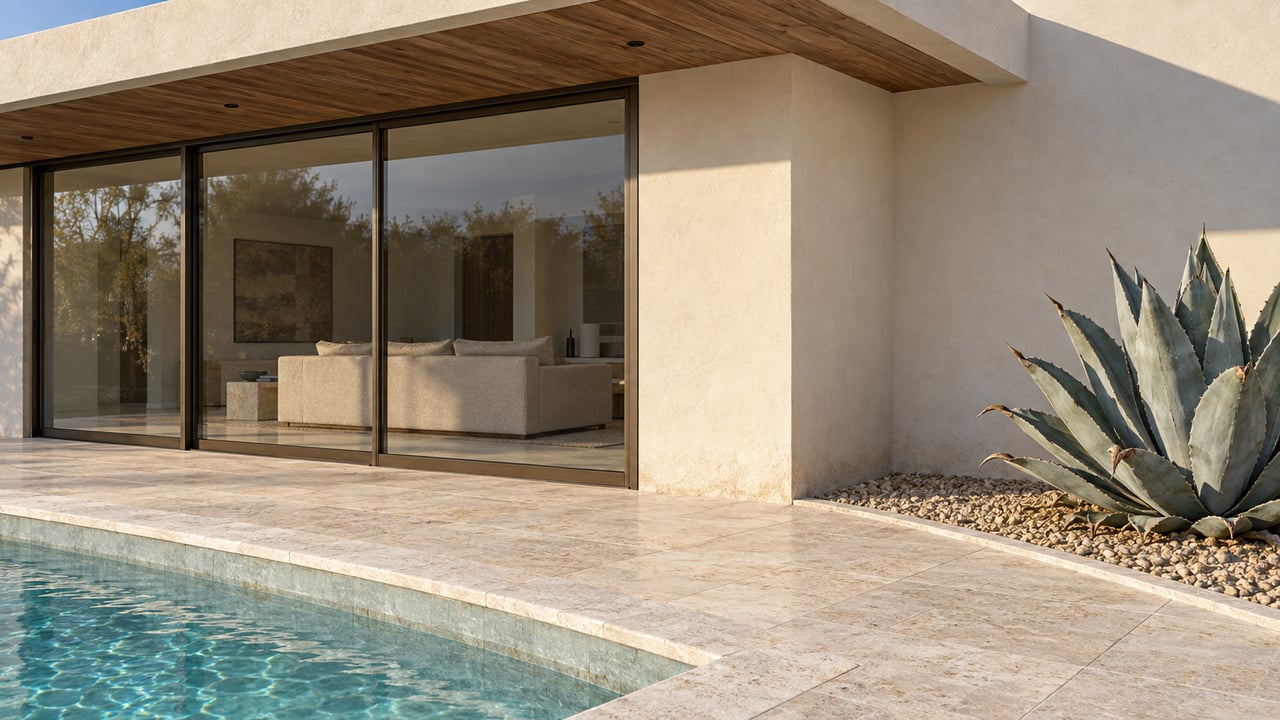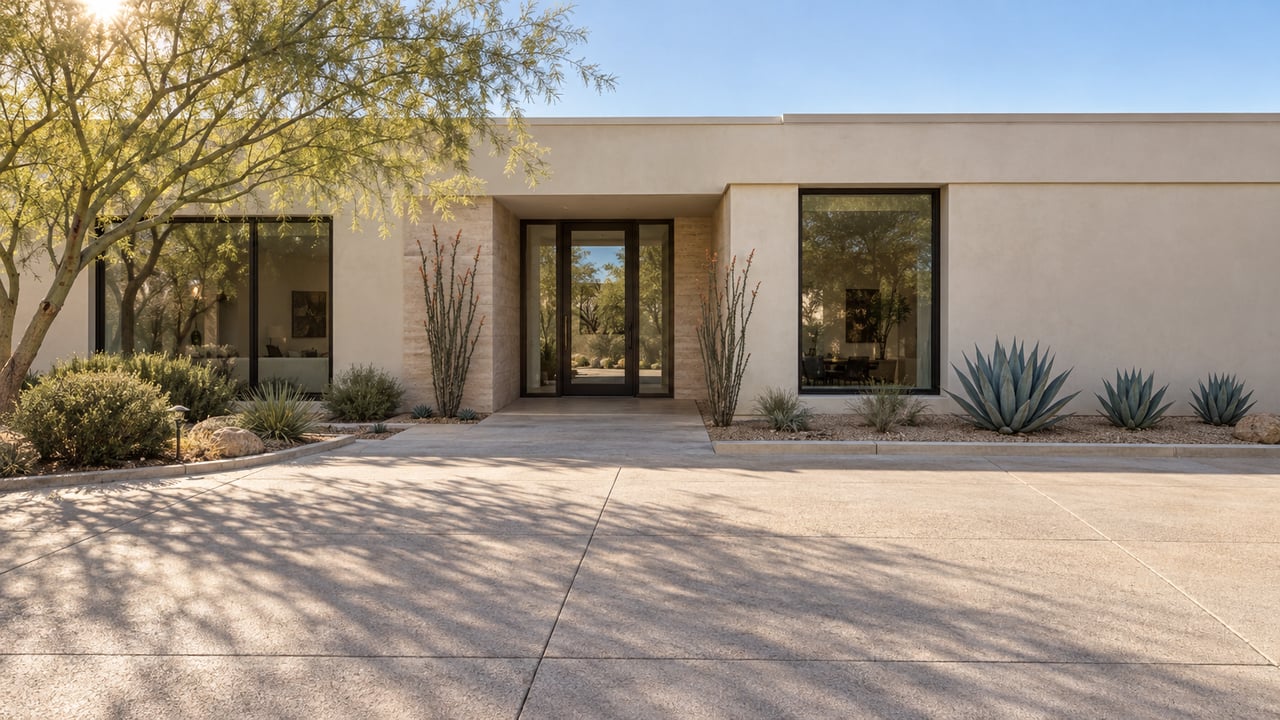
Picture two versions of the same buyer. Both are looking at $3 million to $5 million homes in La Quinta's gated golf corridor. Both assume that when they close on the house, they're also closing on a club membership, because that's how it works at most of the communities they've toured. At one of those communities, they'd be right. At The Hideaway, they'd be wrong, and the difference is worth understanding before they make an offer.
The Hideaway is one of the few private clubs in this part of the Coachella Valley where the home purchase and the club membership are genuinely two separate transactions. You can own a house behind those gates on Jefferson Street and never join the golf club at all. That structural difference matters when you evaluate the costs of a home and any club membership.
A Community Built to Separate the Two
Most La Quinta country club neighborhoods fold club access into the price of admission one way or another. The Hideaway didn't build itself that way. Membership here is invitation-based and capped, currently listed at 450 total golf members split across two 18-hole courses, with roughly 225 members per course according to the club's own materials. The homeowners association, on the other hand, runs independently of that cap. Recent HOA dues reported across current listings for The Hideaway range from around $600 a month up to just over $1,000, depending on whether the property is a custom estate, a villa, or one of the clubhouse-adjacent bungalows.
That gap matters because it means a buyer who wants the address, the architecture, and the privacy without the golf commitment can actually get exactly that. Nothing about owning a Hideaway home obligates you to carry a six-figure initiation fee or a five-figure annual club bill. The numbers only merge if you choose to let them.
It's worth sitting with how unusual that is in this market. The club was originally developed by Discovery Land Company, the same firm behind Yellowstone Club in Montana and Gozzer Ranch in Idaho, and it transitioned to full member ownership on June 1, 2021. Communities built by that developer tend to run tight, all-in ecosystems where the club is the point of the address. The Hideaway retains that club-centered identity, while its separately run homeowners association allows the residential community to stand on its own.
The Renovation's January 2026 Completion
Another point for buyers to consider is that The Hideaway completed a major construction cycle in January 2026.
Club members voted to approve a major renovation in early 2024, a plan that started as a roughly $46 million overhaul of both golf courses, the clubhouse, and the fitness and racquet facilities. Robert McDonald, president of Hideaway's Board of Directors, described that member vote as successful in a Patch report on the approval. By the time the last phases opened in January 2026, the project's scope and cost had grown to nearly $50 million, covering new greens and irrigation on both the Clive Clark and Pete Dye courses, an expanded spa and fitness building, a rebuilt bar and dining program, additional pickleball and tennis courts, and new gathering spaces including a poolside spot called The Key. The signature comfort stations scattered across the courses, including the long-running Snicky Snack stop, stayed part of the member experience through the rebuild.
If you're touring homes here this fall, the renovation is complete. Buyers considering club membership may also want to confirm whether any renovation-related assessment remains in effect.
The $75,000 Assessment's Current Status
During the renovation, incoming members reportedly faced a temporary $75,000 assessment tied directly to the construction cost, with that charge expected to remain in place for two years or until the project reached substantial completion, whichever came first.
The assessment's current status has not been confirmed here. The completion date and the assessment's stated end condition line up almost exactly, which suggests it may have already sunset, but a stated intention from 2024 is not the same as a confirmed policy in September 2026.
If you're seriously considering Hideaway membership alongside a home purchase, this is the first question to put in writing to the club directly. If it remains in effect, the assessment changes your entry cost by $75,000, so confirm its status before making an offer that depends on membership.
Comparing Golf Club Costs
Buyers comparing La Quinta clubs may start by looking at initiation fees. That comparison is useful where membership is bundled with ownership; at The Hideaway, where membership is optional, buyers may also want to compare the costs of owning without club membership.
Reported figures for Hideaway's full golf equity membership vary noticeably depending on which page you're reading and when it was last updated. Some sources still show an initiation fee near $150,000 with annual dues around $26,700. More recently updated figures put initiation closer to $250,000, with annual dues near $41,940 plus a separate capital dues line of roughly $4,800. That's a spread of $100,000 on the entry fee alone, which tells you the market for equity slots here has moved, and moved recently.
Set that next to two neighboring clubs for scale. Andalusia Country Club's 2026 materials list a $60,000 resident golf initiation fee with $2,240 in monthly dues. PGA West lists golf initiation fees around $45,000, with monthly dues ranging from $1,366 to $1,671 depending on tier. Hideaway sits well above both on the initiation side under its current reported figures, and its annual dues run higher too once you include the capital assessment.
Club | Reported golf initiation | Reported ongoing dues |
|---|---|---|
PGA West | around $45,000 | $1,366 to $1,671 monthly |
Andalusia Country Club | $60,000 (resident) | $2,240 monthly |
The Hideaway | $150,000 to $250,000 (range across sources) | roughly $41,940 annually plus $4,800 capital |
The table compares club charges, which do not apply to buyers who skip membership; those buyers can instead compare The Hideaway's HOA-only costs with those of other neighborhoods.
What This Means If You're Comparing The Hideaway to Other Clubs
Before you get attached to a specific home here, get clear answers on a short list of items that won't show up on the listing sheet:
- Ask the club directly, in writing, whether the $75,000 incoming-member assessment is still in effect now that the renovation has reached completion.
- Confirm the current initiation fee and dues structure with the club rather than relying on a figure from an older page, since the range across public sources spans roughly $100,000.
- Ask how close the club is to its 450-member cap, since availability affects both timeline and negotiating position if you do want to join.
- Confirm the HOA amount for the specific property type you're considering, since custom homes, villas, and bungalows have reported different monthly figures.
- Decide, before you shop, whether golf membership is something you actually want, because at this community it is the one major cost you get to opt out of entirely.
None of this makes The Hideaway a harder place to buy. It makes it a different kind of transaction than most of its neighbors, one where the house and the club are priced, negotiated, and confirmed separately. Buyers who treat it that way tend to end up with a clearer picture of what they're actually paying for.
If you're weighing The Hideaway against Mountain View, PGA West, or another gated community in this part of La Quinta and want help sorting the real cost of each from the assumed one, Kathleen Galigher can walk through the current numbers with you property by property. Let's Connect.
This article is general information, not legal, tax or financial advice. Consult a qualified professional about your situation.